Schedule Your Consultation
Pick a date and time that works best for you.


Pick a date and time that works best for you.
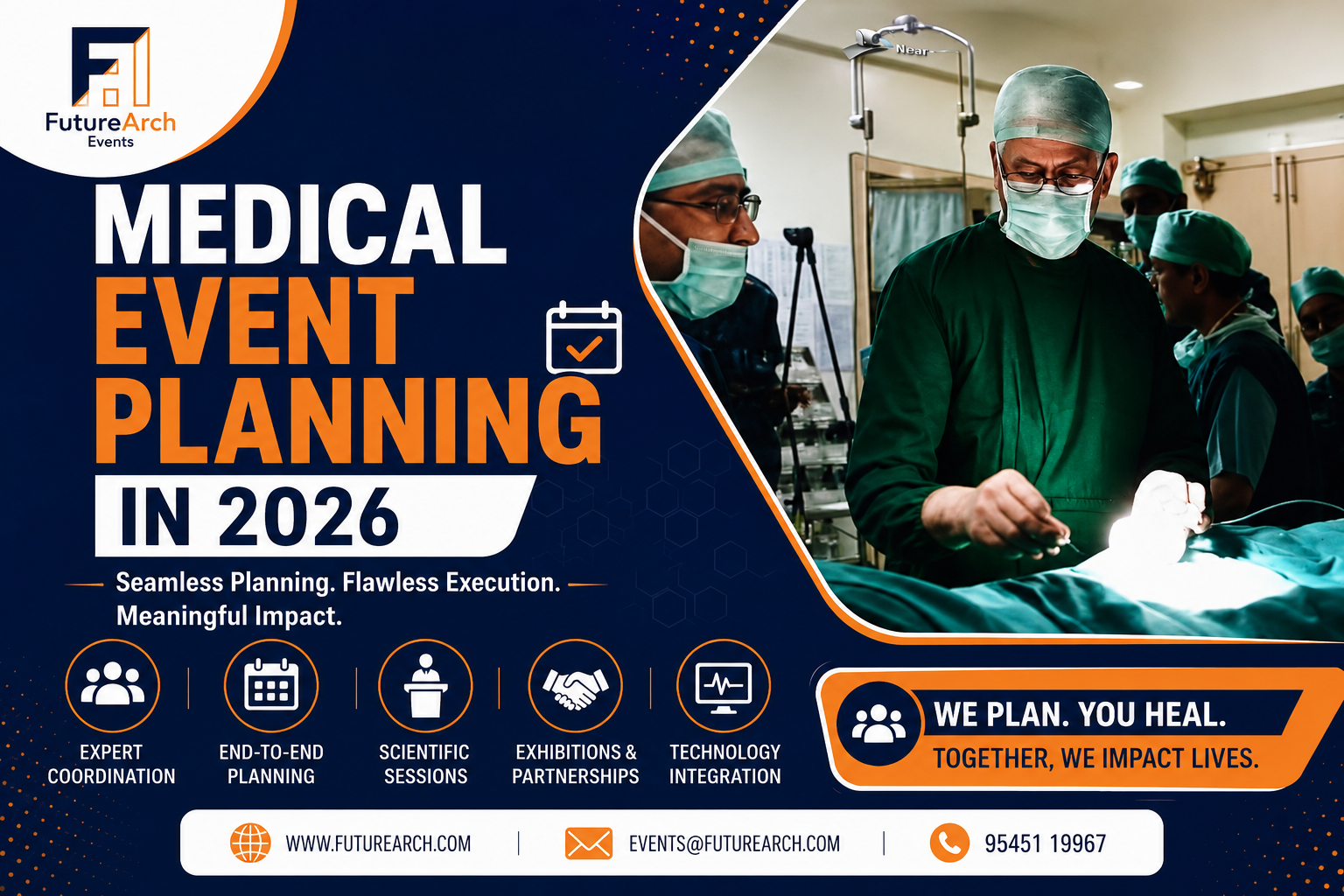
The healthcare industry is evolving rapidly, and so is medical event planning. Hospitals, pharmaceutical companies, healthcare associations, and medical institutions are moving beyond traditional conferences and seminars to create engaging, technology-driven, and compliant events.
In 2026, successful medical events are no longer judged only by attendance. They are measured by attendee engagement, educational value, networking opportunities, compliance, and overall experience.
Whether you’re planning a medical conference, Continuing Medical Education (CME) program, product launch, healthcare seminar, or hospital event, understanding the latest medical event planning trends will help you deliver exceptional experiences while achieving your business objectives.
This guide explores the most important trends shaping medical event planning in 2026 and explains how professional event management can ensure successful healthcare events.
Medical event planning is the process of organising healthcare-related events while ensuring seamless logistics, professional execution, regulatory compliance, and meaningful attendee engagement.
These events may include:
Unlike traditional corporate events, medical events require specialised planning because they involve healthcare professionals, scientific content, industry regulations, and sensitive operational requirements.
Healthcare professionals expect more than a well-organised venue. They look for educational value, smooth registration, relevant networking opportunities, and access to the latest medical innovations.
Professional medical event planning helps organisations:
Hybrid events have become a preferred format for hospitals and pharma companies.
Participants can attend either in person or virtually, making healthcare education more accessible while increasing audience reach.
Benefits include:
Artificial Intelligence is transforming medical event planning.
AI tools help organisers:
AI also helps event teams make faster decisions based on real-time data.
Healthcare professionals prefer customised event experiences.
Modern event planning focuses on:
This improves attendee satisfaction and encourages repeat participation.
Compliance remains one of the most critical aspects of medical event planning.
Healthcare organisations must carefully manage:
Professional event planners ensure every stage follows industry guidelines and organisational policies.
Traditional presentations are giving way to more engaging experiences.
Popular formats include:
These formats improve knowledge retention and audience participation.
Environmental responsibility is becoming an important part of medical event planning.
Hospitals and pharma companies are adopting:
Green initiatives help organisations reduce waste while strengthening their corporate image.
Technology continues to improve every stage of event execution.
Popular solutions include:
These tools simplify operations and enhance attendee engagement.
Healthcare professionals often work under demanding conditions.
Modern events now include wellness initiatives such as:
These additions create a better overall attendee experience.
Successful organisers now rely on analytics to improve future events.
Useful metrics include:
Data insights help hospitals and pharma companies refine future event strategies.
Healthcare organisations increasingly prefer experienced event management partners who can handle every aspect of event planning.
Professional services include:
This allows healthcare teams to focus on medical content while experts manage logistics.
Despite technological advancements, organisers still face several challenges:
Working with an experienced medical event planning company helps minimise these risks.
Follow these proven strategies:
Medical events demand precision, professionalism, and careful coordination. FutureArch specialises in delivering healthcare events that combine seamless logistics with engaging experiences while meeting the unique requirements of hospitals, pharmaceutical companies, and healthcare organisations.
Our medical event planning services include:
With a focus on quality, innovation, and operational excellence, FutureArch ensures every medical event is organised efficiently and leaves a lasting impression on attendees.
Medical event planning is the process of organising healthcare-related events such as medical conferences, CME programs, pharmaceutical launches, workshops, and hospital meetings while ensuring smooth execution and compliance.
Professional planners help manage logistics, registrations, compliance, speakers, venues, production, and attendee engagement, allowing healthcare organisations to focus on delivering valuable medical content.
Key trends include hybrid events, AI-powered event management, personalised attendee experiences, digital registration, sustainable event practices, wellness initiatives, and data-driven event planning.
Hospitals, pharmaceutical companies, medical associations, healthcare startups, research organisations, diagnostic centres, and educational institutions all benefit from professional medical event planning.
FutureArch provides end-to-end medical event planning services, including strategy, venue selection, branding, speaker coordination, production, delegate management, and on-site execution for healthcare events of all sizes.
As the healthcare industry embraces innovation, medical event planning is becoming more strategic, technology-driven, and experience-focused. Hospitals and pharmaceutical companies must adopt modern trends such as hybrid events, AI-powered management, personalised experiences, and sustainable practices to meet the expectations of healthcare professionals.
Partnering with an experienced event management company ensures every aspect of your event—from planning and compliance to execution and post-event analysis—is handled with precision.
FutureArch is committed to delivering professional medical event planning solutions that help hospitals, pharma companies, and healthcare organisations create impactful events that educate, engage, and inspire.
